Showing posts with label NAPA-OT. Show all posts

Saturday, August 27, 2011

Article for OT connections magazine - Discovering the interface of OT and Anthropology discourse


Discovering the interface of OT and Anthropology discourse Antigua, Guatemala

NAPA-OT Field School (18 July – 12 August 2011)

www.napaotguatemala.org

Linda Rylands graduated from the Occupational Therapy program at the University of Queensland (UQ), in 2002. As an OT, Linda specialized in the area of mental health for 5 years. After spending time working and travelling abroad, she returned home to Brisbane in 2006 and joined an innovative and dynamic local network of OT’s: Occupational Opportunities for Refugees and Asylum Seekers (oofras.com). This progressed to a case management role in a lead settlement service for refugees in Queensland where she was particularly interested in exploring the OT role during refugee settlement. Linda has been humbled by the stories and journeys that she has been privileged to share with families settling in Australia. Currently pursuing a BA of Anthropology, UQ she is now passionate to explore the fusion of Anthropology and OT frameworks in study and practice.

To further the development of this area, Linda successfully applied to join an intensive 4 week field school for July 2011 which included a faculty of 5 from the US and 12 international OT/Anthropology/Public Health students. The field school is a project of the NAPA-OT SIG (Occupational Therapy and Occupational Science Interdisciplinary Special Interest Group within the National Association of the Practice of Anthropology). NAPA (practicinganthropology.org) is a section of the American Anthropological Association (AAA). Faculty includes anthropologists and occupational therapists with credentials in medical anthropology, occupational justice, health care access and human rights, gerontology, child development, disability studies, and public health.

The main vision of the field school is to offer a specialized transdisciplinary applied learning opportunity in the field of OT, anthropology and public health to promote leadership qualities and innovation in this area. The aim is also to collaborate with local projects and needs through Guatemala-based NGO networks. The curriculum consisted of weekly seminars and local guest speakers (e.g. Guatemalan health system in context of history of violence, human rights discourse), applied project work and opportunities for innovative dialogue through discussion groups (e.g exploring concept of “occupational justice” as emerging area in OT and anthropology). One of the 3 areas of Focus area group projects involved a research process (interviews, data analysis and report) with the aim to improve the coordination of surgery referrals to meet needs of local Guatemalan population. This offered the opportunity for individualized mentorship in field methods. In addition, the curriculum included study of Spanish for 9 hours a week and cultural immersion in a homestay with a Guatemalan family.

Interview with Linda:

What motivated you to choose to undertake such a program?

Ever since working as an OT in mental health, I have been driven to question, What is mental health? What is happiness and well-being? By who’s standards? In what context? How does this differ in other cultures? And how do OT’s help? Of course I quickly realized that these are questions with complex answers given the diversity of the human experience. Through my initial anthropological studies I have started to consider, despite this diversity, what are the human universals? And then how does this relate to ‘meaning’ and ‘occupation’.

On my path of discovery, I immersed myself in my work in different contexts (abroad, private, public), attended conferences (e.g. ‘happiness & its causes’). Of course I experimented with my own personal life, for example the value use of money and time and the activities of yoga and dance. I also became very conscious of the power relationships inherent in the ‘therapist-client’ relationship. From this exploration I was not convinced that the OT philosophy (being primarily occupation-centered) fitted with the primarily medical model orientated ‘mental health’ services. There was so much more to it.

I returned home from travelling in 2006 curious about the occupational experience of migrants and refugees settling in Australia. At this time I had the opportunity to attend WFOT 2006 where I was inspired by the OT’s working on a global scale in community development and introduced me to concepts of occupational justice and human rights. I experienced further exposure in my role in the refugee settlement service, through pure immersion in a diverse working environment as well as seeing the innovation and potential of several OT student projects. In addition, with my supervisor being from an anthropology and social work background she shared with me tools for working across cultural and language barriers, considering power dynamics and the continual role as an advocate. It got me thinking, what about the OT and Anthropology interface?

Why did you choose to apply to this particular field school?

After googling OT and Anthropology I found out about the NAPA-OT list serve. I promptly joined and started to receive regular updates about interdisciplinary OT/Anth work. This is how I learnt of the NAPA-OT program for 2010. As far as I knew, this is a unique program that is not offered elsewhere. I wanted to join straight away. I found out about it when I had just returned from a 2 month journey in Africa, and it was also around the same time as WFOT 2010 in Chile. Although I was unable to attend the WFOT conference, I committed to attending the NAPA-OT the following year in July 2011. I applied in December and was informed that I was successful in Jan 2011.

Who else will be participating in the program?

The program is headed by Gelya Frank (Ph. D Anthropology and founding contributor to occupational science), Rachel Hall-Clifford (Medical Anthropologist and Public Health); Nancie Furgang (OT – Pediatrics) and Peggy Perkinson (OT – Gerontology). There were 12 OT/ Anthropology and Public Health students from mostly from the US and also Canada and Holland. I was the sole Australian Ambassador.

What were your expectations of the program?

Other than general life and career inspiration, most of all I was hoping to leave the program with some understanding or frameworks to integrate the professions of OT and Anthropology. I was hoping that this could be the start of a new path where I would make some lifelong connections with people who were passionate in the same areas. In addition I was hoping to understand the academic literature in this area and to benefit from mentoring from those who were pioneers in this area. Perhaps I would like to apply this knowledge to healing traditions globally. All these hopes and more were met by the program.

What did you get out of it that you didn’t expect?

I was really pleased to be part of small research team where we were not only lectured intensively on topics but I also gained some tangible research skills. Working as part of a team of 4 students and mentored through the process, we worked on a compelling relevant topic for the Guatemalan health system and conducted real life research and through a complete phase with an action learning component. I feel like I have walked away not only contributing to building better collaboration between NGO’s focusing on service delivery in health services, but also concrete skills in interviewing, developing a research program, conducting data analysis and collating information into a research report. I also have a deep understanding of the Guatemalan health care context should I get the opportunity to do future projects.

I really enjoyed the challenge of learning a new language along with learning more about the context.

What conceptual learning did you develop?

I learnt that there were not really hard and fast answers in relation to the interface between Anthropology and OT but that these conceptual links had the creative edge of being a work in progress. For example in general Anthropology defines the ‘macro’ with OT looking at more a ‘micro’ lens – thus both need each other to function. While Anthropology can provide a deep lens to look at human diversity and the political and social context, OT frameworks have the confidence to ‘intervene’ and create change on a person or community level. OT was thus described as an ‘optimistic’ profession which is hopeful to inspire positive change. And finally - what is culture anyway? There are many definitions and this was the core of one of our dynamic discussions with the students especially due to the integration of OT and anthropology philosophies. One definition is culture as “sets of competing discourses (ways of thinking about things - meaning) and practices (ways that things are done – occupation) in a field of unequal distribution of power” – Sherry Ortner (Anthropologist). What is interesting about this is the incorporation of meaning and doing but also acknowledging the context of hierarchy and power structures in every society where some ideas or ways of doing are heard or given more power than others.

Would you do something like this again?

Yes, I am full of inspiration and the structured orientation to a culture as well as the learning by doing and applying was a rich and full experience and has added depth to my ability to practice and understand more about the context of many developing nations with government corruption. I encourage anyone interested in this interface to contact me for more information or apply for 2012.

How do you think it will change the way you approach your profession?

This course has reignited my passion in applying occupational frameworks into different areas outside of traditional health delivery. I look forward to applying the research skills that I have learnt to further projects of inquiry into unexplored areas and continue to complete my Anthropology studies. Most likely I will return to working with refugee populations when I return to Australia but also would like to work in the area of support and revitalization of Australian Indigenous culture. The networks that I have developed and mentoring relationships will be lifelong.

Where to from here?

I will be staying in San Marcos, Guatemala for the next 2-3 months to complete and independent study unit for my Anthropology studies – I will be focusing on healing methods in local Mayan contexts and looking further into the literature of OT/Anthropology interface.

In order to present the findings of our NGO project our team have been invited to attend a local conference in Guatemala on 7-9 October called “Beyond Development – Networking Conference” (www.futuroscolectivos.com) where we hope to be part of the dialogue and collaboration of many of the NGO’s working on the ground for health care in Guatemala. The cost is US$75 and would welcome any scholarship or donations to make this a possibility.

Please contact me at lindarylands@gmail.com or skype: lindarylands12.

For those OTs interested I would like to host a discussion group/ resource sharing time in March 2012. .

Friday, August 12, 2011

Final Day FIESTA (and pinata!)


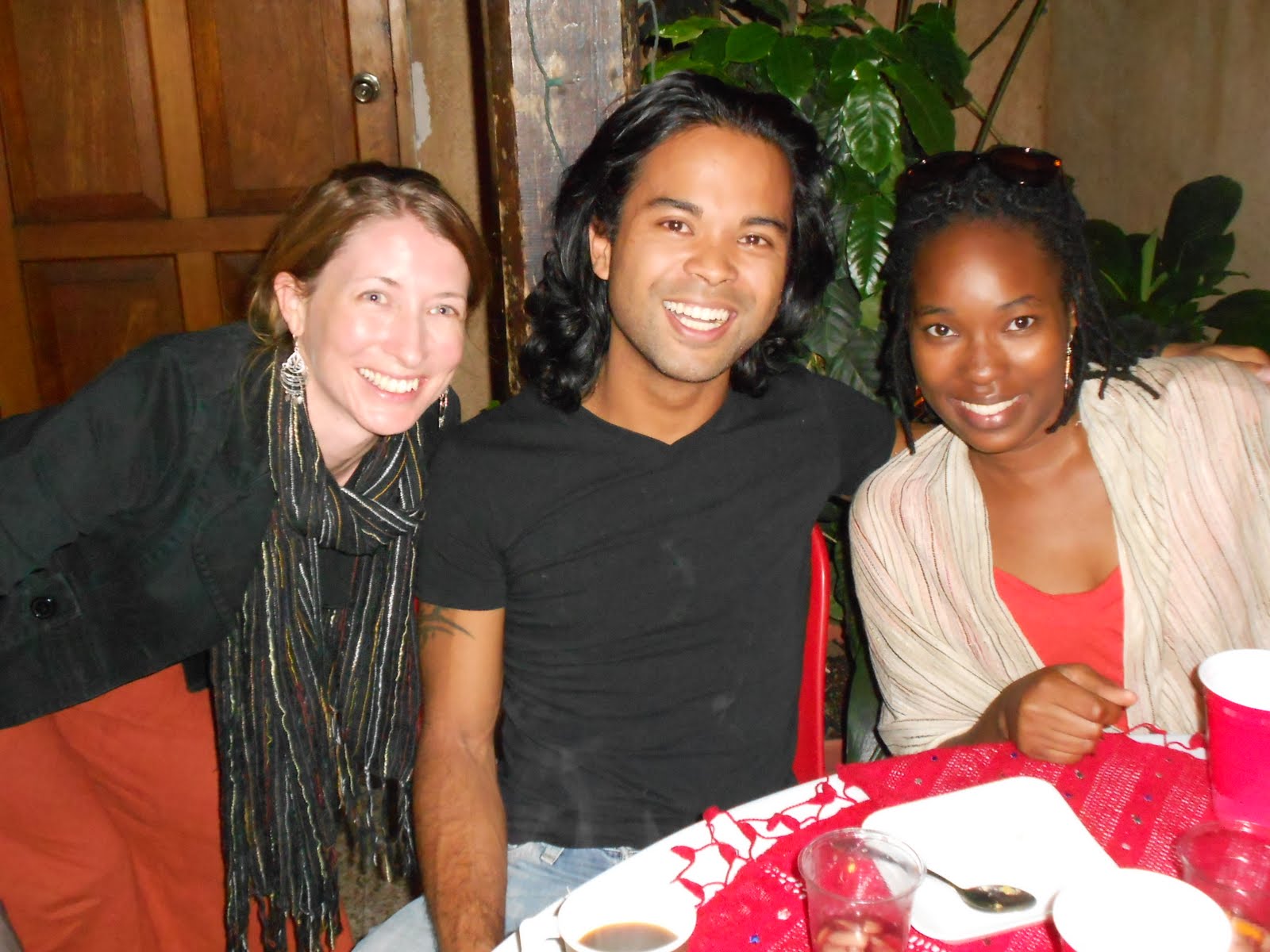
On the final night we were able to let down our hair. Our mentors hosted a wonderful dinner and then we were in for a surprise - a Pinata!!! It was my first time and since I was the second oldest in the group I was the second last to try to hit the Pinata for the treats!! It was hilarious because after being blindfolded and spun I was walking in completely the opposite direction for AGES - everyone was in hysterics! Finally I found it and I was so full of energy but that time I gave it several good wacks- so it was on its last legs by the time it was Max's turn (the oldest student!). We were all Buzzing after the Sangria and the energy of all that we had achieved. I even remember teaching others 'french cricket' with all the energy I had! The night ended with us heading out on the town in Antigua. oh and I got the "Dancing Queen" Award!

Final Presentation of NGO group


The final day! And our Presentation to the student group - as you can imagine we were stoked to finish! Last night we were up till late working on the report document and Rachel informed us that only Friday morning we would have time to write our presentation.

The presentation preparation – we were really focused and worked amazingly as a team to get all of the content together for power point presentation and we didn’t even have TIME to get nervous or think about what we were going to say!

We got some great feedback on our presentation – although it was running way over time, we really had a great sense of ownership over the project and I’m sure that came through.

Tuesday, August 2, 2011

OT students from Guatemala City - a highlight


Wow- was such a pleasure and highlight to meet the group of OT students from a university in Guatemala city. Inspiring to hear about the program here and the links with other OT schools in Central and South America. I even got some links about OT and refugee work in Guatemala so may have time to follow this up some more.

Monday, August 1, 2011

Field Trip to Ecofiltro (www.ecofiltro.org) - the solution to world wide water problem?


What a wonderful visit to Ecofilter a ‘for profit’ business that is with a social conscious. These clay filter inventions were founded by Dr. Fernando Mazariegos who was a Guatemalan scientist who was given a grant from the Interamerican Development Bank to find a way to purify water in an effective, ecological and affordable way. In his childhood he had already been exposed to a large traditional clay pot filtration method. The pots were manufactured in a house-like open factory environment and they are made of local clay, sawdust and colloidal silver (a natural anti-bacterial). IT is scientifically proven to capture the bacteria and parasites that lead to gastrointestinal disease. A very important part of the filtration process is that it must drip at a certain rate per hour (1-2 L per hour). The success rate of ending up with the correct texture for drip rate was just more than half which he was transparently concerned about. The business will soon move to a brand new bigger factory in a nearby area. He discussed other ‘inefficiencies’ such as the numbers of steps people took to do their jobs, and the use of the beautiful historic French kilns (to be replaced by gas), and I wonder how with the new factory this increase in ‘efficiency’ would alter the experience of the occupation in the factory. Because efficiency = good business and good for people? What would the new environment be like? Also I was pleased when I saw a soccer field was written into the plans of the new factory with the rationale ‘we want our people to be healthy and happy’. However it is not clear about how long the technology lasts – whether it is 2 or 3 years and how the community would manage this turnover. John (previous CEO from Private Sector seeking meaningful life/work change and experience in business and sales) was an inspiring speaker. I really resonated with this organisation, especially in relation to intestinal problems – and where best to start than with good water and fresh food. IT was interesting the ‘occupation’ aspect of it which of course all the OT’s pricked their ears up at. HE talked about the older man in the village from where the ‘pine sawdust’ (non-native trees), he must have been a potter all his life, and his love to work with his hands. While Mr CEO is expecting and demanding more efficiency by offering to send machinery, the potter just replies that he has no need for machinery, because what is the point when you can no longer use your hands (The OT’s were in heaven!!!). Using the hands as part of the craft is part of the joy and love for the occupation. The CEO is surprised at why a potter would not want to ‘make his job easier’ especially when he comments he would like to clone this particular potter because of the amazing quality work that he does. No one else is quite like him. Imagine how he must be viewed in his community. I wonder who he mentors and if the younger generation of his community are inspired by his work and other lives that he has touched. Would be a very interesting man to meet and explore this life of ‘meaningful occupation’ and ‘success and talent’ in the eyes of a foreign investor. The other area this man could boast was the ability to source only local materials for the pots.

A research project had been completed by his sister in 1991 which compared the health outcomes of communities that did not have the ecofiltro and those that did and those that had it and also an education program. The education program of course includes how to use and look after the filter and I imagine the importance of fresh water. This is delivered by a local women from the community (language abilities?). The filter is able to ward off E.colli. They are also aiming to market the product to the people who use bottled water so they can offer the product to the poor at a lower price. This can be a great addition to other programs that dig wells etc.

This got me thinking about looking towards the future the potential for interdisciplinary work with Anth, OT, Community Development and environmental scientists – be a great combination for creating ‘transdisciplinary dialogue’.

In order to set up these factories in other parts of the world he said that what they would do is first find the potting community! Very interesting… Imagine travelling the world and searching for potting communities to introduce an idea that can bring more money into their lives and potential save the health of children in their community.

How interesting that these reflections about ‘inefficiency’ reflects the Brown Rockerfellar article and seems to reflect the imperialist history of a dependent economy.

‘Health is defined as the capacity to work’ Brown. How are we defining health? Why do we have a ‘health’ system anyway and why is it siloed and separate from ‘social’ systems and religion – because everything is linked anyway. Why did we have to intellectually separate everything?

“If public health is to be an advocate of the interests of the majorities of all peoples, it must not be used to dominate and oppress them.” Brown

Friday, July 29, 2011

NAPA-OT out and about on field trips


Comalapa.

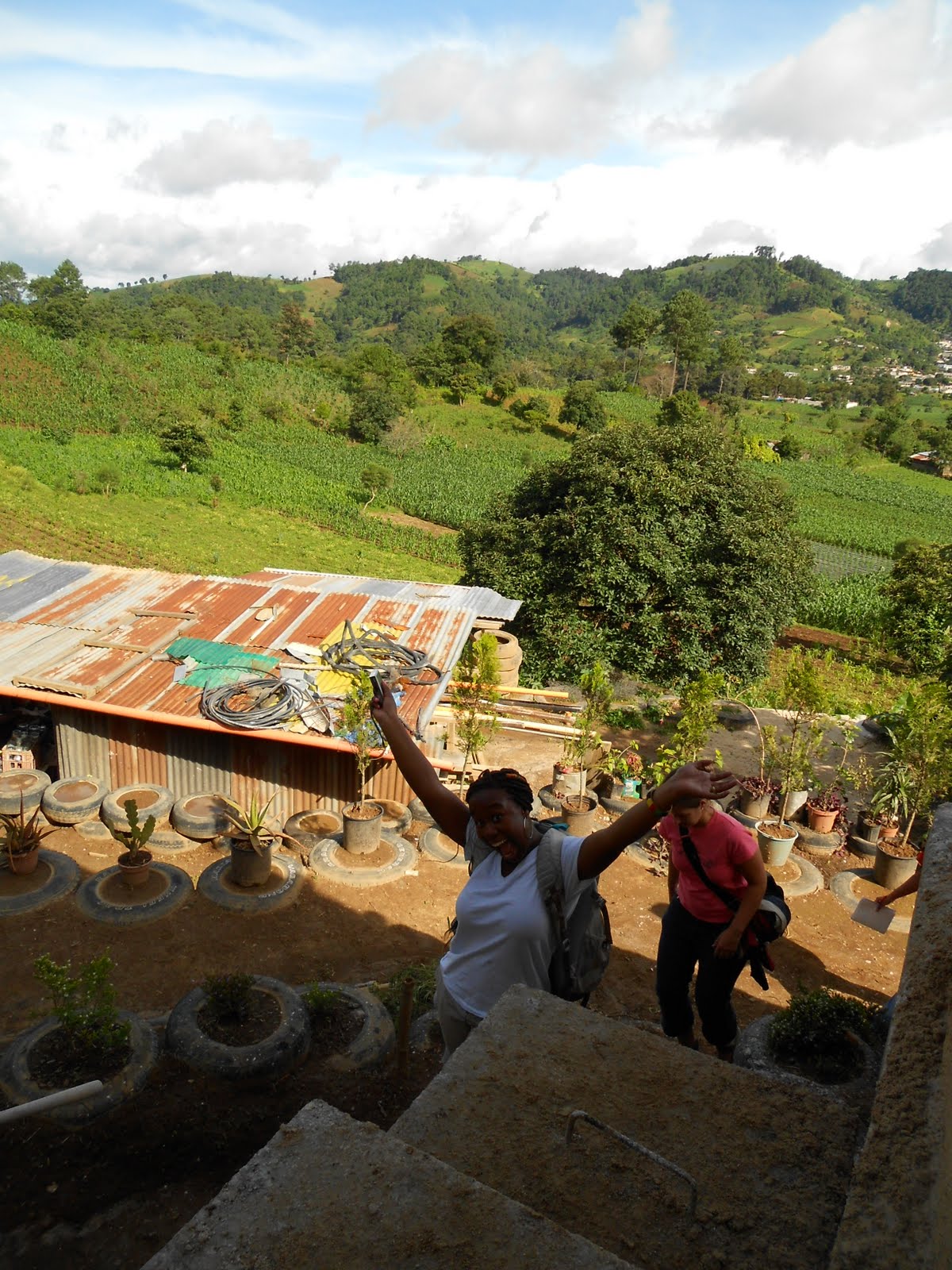
1st stop was to ‘Long way home’ where a man from the US was given some land and then after realising how expensive it would be to build, looked into recycling methods and did some research – and then founded this recycling building project. So they employ locals for the job opportunities and teach in local masonry techniques. It is amazing to think about these people about what motivates them to do these projects in the middle of nowhere and really commit. Surely it is more than just having the opportunity and access to a plot of land. For example he talks about wanting to ‘prove’ himself and gain respect by showing to the community that he could dig out the land with his own bare hands. What is behind all of this?

Field Visit - Comalapa - local Kaqchikel Curandera, Maya Works - microcredit cooperative

We then visited the traditional Medicinal women (Cuarandera) which was really exciting. IT was interesting that she said that she found her calling only later in life when she was 48 years old. This is when she started to practice. She presented 5 or 6 different plants that she commonly uses to treat ailments (would love to know more about what these plants are and the connection between her methods and naturopathy practice). She also mentioned that she assists people following surgery including with infections. She says that she eats just plain comida but then if she gets sick will treat herself with herbs.

Friday, July 22, 2011

Thursday 22.7.11

Another great day on the fieldwork program. The day started with finalising our NGO interview schedule ready for Friday. The NGO group will be conducting an interview with Wuqu’ Kawoq (NGO who’s mission is to improve health care outcomes by strengthening Indigenous languages, culture and access to medical services). Our project is about looking at the viability of matching the organisation with another one which is called ‘Link for health’ who is involved in matching volunteer surgery teams from North America and the viability of this. So we have a detailed interview schedule ready for Friday.

We had lectures this morning about the Guatemalan health care system. This was great to have an overview of the tiered structure which again resources Biomedical interventions and health promotion/ traditional healing services based in the community appeared to be a ‘added benefit’ and hardly funded. Interesting cardio-obstructive pulmonary disease was the number 1 killer – presumably related to preventable occupational hazards including smoke exposure (cooking), pollution. After that came, HIV/AIDS, lower respiratory infection, violence (interesting factor on top of list) and then perinatal. We also were introduced to the political structure of Guatemala where we talked about the corruption in voting and also for whom is able to be elected. Also interestingly number 1 income for Guatemala is remittances from abroad.

I was well aware of the gap in discussion of Occupational concepts that had potential to be linked with Med anth concepts presented. Was there the possibility of Occupation overview and the OT voice to be included in the discussion on ‘Guatemalan social security institute’. How does occupation and employment relate to health care in Guatemalan context? What are the occupational health issues? How do peoples lifestyles and occupational choices link to health outcomes of indigenous people? How does cultural practises affect this? Frameworks around this?

And a dynamic discussion about the Rigoberta Menchu book. From the ethics of the David Stoll critique of the book not representing ‘truth’. This was my first exposure to the social science of Anthropology to discover and strive for ‘truth’ by uncovering accounts from different points of view. Another good point made was perhaps the frustration of indigenous people of not only being ‘under represented’ but being ‘misrepresented’ by Rigoberta’s story. The point was made that it is a testimonial (subjective version of a story ) vs an ethnography or a illness narrative. From my point of view the story has every right to be ‘illogical’ or represent a ‘collective memory’ given the traumatic history and experience. It has every right to exaggerate the truth given the horrors that a human being has had to suffer through. That is my OT ‘meaning and purpose’ and ‘therapeutic’ hat. But in terms of talking about responsibility of being ‘scholarly’ or ‘ethical’, Im not sure. But I definitely agree with the responsibility of anyone determined to ‘critique’ and pick apart someone else’s story especially with a trauma history is strange. I was also looking around and thought that the discussion would be truly enriched by the addition of local Guatemalan anth/ OT (or closest things to?) students who could join as part of a scholarship program. Wouldn’t half half be so great?! So many local people would really benefit and be empowered by discussion and critique on own health services and build collegial relationships with students from different health system experiences.

Also a final quote that stirred me with the ‘ethics’ workshop. “not everyone wants to be empowered”. I am not sure what this is getting at but I believe that most people would prefer power over non-power and perhaps the meaning is more about being ‘used to’ and authoritative approach to health care.

It is also quite interesting how the info about ‘mentality’ of Guatemalan people reflects the conversations I am having with my SPansih teacher. He appears to believe that things are ok in Guatemala just not wanting any more violence, blaming past troubles on the US intervention during Cold War and not wanting or caring about elections because it wont change anything. It is also that foreign concept I am learning about the power or drug cartels in central America. Which makes me wonder.. who buys these drugs and do they know or care how it is affecting other countries? What is the history of this trade? It has been going on for years I guess.

Monday, July 18, 2011

First Day of NAPA-OT


Monday 18 July 2011

Wow our first day on the NAPA-OT program!! It was really amazing!!! The day started with us meeting everyone outside the church!!!! Was a quick meeting and then we were on the ‘chicken bus’ to the Common Hope centre. It was an exhilarating but safe experience having to be able to travel with the whole group.

I was almost jumping out of my skin with excitement when the presented about Occupational justice, then OT then Medical anthropology !! Was so amazing to have all 3 in one! I felt so excited could hardly sit still and I really wanted to record the whole thing – I guess it was like having my OOFRAS hat on – that this gem should not be wasted! So we got into our NGO network group – I am with other students, Max, Sarah G, Stephanie and I. So we start tomorrow with Rachael and Gelya on the project.

For dinner we had potato and meat presented on a banana leaf which was nice and then we had fruit and crepe for breakfast. Im so much happier here and family is really friendly at dinner times.